Showing posts with label aviation history. Show all posts

Sunday, March 7, 2010

Airships & Zeppelins

Continuing the History of Aviation through Philately...

For various reasons I was not able to update my blog for the last 4 months.  But I'm back.  My apologies to all who have been following my blog.  I hope to update regularly so keep visiting to read the fascinating history of Aviation as narrated through Philately.


The quest for controlled flight filled the imagination of inventors through the centuries.  Early balloons were not truly navigable so there were constant experiments to improve maneuverability of balloons.  Some of these included elongating the balloon's shape and, using a powered screw to push it through the air.  And thus balloons slowly developed into airships or drigibles from the French (diriger  to direct plus -ible), meaning "directable" or steerable.     This was another milestone in conquering the air.

The first airships were called dirigible balloons. Over time, the word balloon was dropped from the phrase. In modern usage, balloon refers to any buoyant aircraft that generally relies on wind currents for horizontal movement, and usually has a mechanism to control vertical movement.


The main types of airship are non-rigid (or blimps), semi-rigid and rigid. All these are navigable airships capable of being directed, steered and propelled through the air using rudders and propellers or other thrust.  Unlike other aerodynamic aircraft such as fixed-wing aircraft and helicopters, which produce lift by moving a wing, or airfoil, through the air, aerostatic aircraft, such as airships and hot air balloons, stay aloft by filling a large cavity, such as a balloon, with a lifting gas.

Credit for the construction of the first navigable full-sized airship goes to French engineer, Henri Giffard, who, in 1852, attached a small, steam-powered engine to a huge propeller and chugged through the air for seventeen miles at a top speed of five miles per hour.


Henri Giffard and his airship shown on a Cuban stamp of 2000.

 
A non-rigid airship comprises of a gas-filled container and a car with a motor and propeller suspended beneath.
Semi-rigid airships are slightly larger and have some form of internal support such as a fixed keel. Rigid airships with full skeletons, such as the huge Zeppelin transoceanic models, all but disappeared after several high-profile catastrophic accidents during the mid-20th century.

In 1872 Stanislas Charles Henri Dupuy de Lôme (15 October 1816 – 1 February 1885), a French naval architect launched a large limited navigable balloon. 


 The Dupuy de Lôme airship was 36 meters in length, 14.84 meters in diameter, 29 meters wide, and had a total volume of 3,454 cubic meters. It was powered by a 2 horsepower (1.5 kW) engine, providing a speed of between 9 to 11 km/h. The basket under the balloon could carry eight, several operating the balloon and others observing. She was the first operational airship, and was employed during the last days of the Franco-Prussian war. 
Airships were the first aircraft to enable controlled, powered flight, and were widely used before the 1940s, but their use decreased over time as the capabilities of airplanes far surpassed those of airships besides the safety of airships was also questioned.

Airships are still used today in certain niche applications, such as advertising, tourism, camera  platforms for sporting events, and aerial observation platforms, where the ability to hover in one place for an extended period of time outweighs the need for speed and maneuverability.

Another airship pioneer was Paul Haenlein (17 October 1835 in Cologne — 27 January 1905 in Mainz) was a German engineer and flight pioneer. He flew in a semi-rigid-frame dirigible with an internal combustion engine running on the coal gas used to inflate the envelope over Vienna, the first use of such an engine to power an aircraft in 1872.

 
Stamp issued by St. Thome & Principe showing The Paul Haenlein airship.


Other pioneers were Albert & Gaston Tissandier French brothers. Gaston was a French chemist, meteorologist, aviator and editor. Adventurer could be added to the list of his titles, as he managed to escape besieged Paris by balloon in September 1870.  In 1883, Tissandier fitted a 1.5 hp  Siemens electric motor to an airship, thus creating the first electric-powered flight.

Stamp issued by Liberia showing theTissandier airship.


Brothers Albert & Gaston Tissandier depicted with their airship on a Cuban stamps issued in 2000
 
   
The first fully controllable free-flight was made in a French Army airship, La France, by Charles Renard and Arthur Constantin Krebs in 1884. The 170 ft (52 m) long, 66,000 cu ft (1,900 m3) airship covered 8 km (5.0 mi) in 23 minutes with the aid of an 8.5 hp (6.3 kW) electric motor,and a 435 kilograms (960 lb) battery. In 1884 and 1885, it made seven flights. This was probably the first controlled, sustained flight by a lighter-than-air craft.

Cuban stamp issued in 2000 showing Charles Renard & Arthur Krebs and their Airship


The first flyable rigid airship was created by David Schwarz (December 20, 1852,– January 13, 1897,  a Jewish Hungarian  aviation  pioneer. It was also the first airship with an external hull made entirely of metal.  He began construction late 1892, with industrialist Carl Berg supplying the aluminum and necessary funding.However, his first airship built in late 1892 exploded while the gas was being filled.  

Construction on his next airship started in 1895. The pieces were produced in Carl Berg's Eveking Westphalia factory and under the direction of Schwarz, assembled in Berlin.  A gondola, also of aluminum, was fixed to the framework. Attached to the gondola was a 12 horsepower (8.9 kW) Daimler engine that drove aluminum propellers. One of the propellers was used to steer the craft. The airship was first filled with gas on 1896-10-09 and tested, but the results were not satisfactory because the hydrogen gas was not of the required quality and did not provide sufficient lift. Gas with that quality could not be produced until 1897-01-13, the day of Schwarz's death.


The airship was tested with partial success at Tempelhof near Berlin, Germany, on November 3, 1897 when it lifted off at 15:00 At about 130 metre altitude the driving belt slipped off the left propeller, causing partial loss of steering, the ship "turned broadside to the wind, and the forward tether broke free. As the ship drifted up to 510 metres the belt slipped off the right propeller, thus losing all steering. The pilot then opened the newly fitted gas release valve and landed safely, but the ship turned over and collapsed.

Stamp issued by hungary in 1967 showing David's Schwarz's Airship

Monday, December 8, 2008

Balloons used to carry mail out of a sieged city.

During the Franco-Prussian war of 1870-71 the city of Paris was completely cut off from the outside world by the Prussian army. Balloons were used to carry refugees and mail from the besieged city.

From 19th September, 1870 to 28th January, 1871, 66 balloons were used by the Parisians to carry 155 refugees, 354 carrier pigeons and over 2.5 million letters out of Paris. Each piece flown required a notation "Par Ballon Monte" indicating that it was a manned balloon. Balloon montes are relatively expensive and prices can vary according to specific balloons and markings.


Covers flown out of Paris were then forwarded to the addressees through normal mail channels.


Special balloon postcards 10 x 7 cm were manufactured of thin green paper subject to a maximum weight of 4gm.


The address side of a balloon postcard from the siege of Paris, 1870. Postage of 20 centimes was imprinted on the card.

Thursday, June 12, 2008

History of Aviation through philately

History of aviation can be graphically depicted through philately: stamps, postmarks, special covers etc.

Where does the history of flight start? Man has always been fascinated by the ability of birds to glide through air so effortlessly and has dreamed of flying from earliest times. The earliest record of flight is in Greek mythology. The story of Daedalus and Icarus is well known. Imprisoned on the island of Crete Daedalus who must have been an accomplished inventor, planned their escape by making wings of wax and feathers. They attached these wings and flew away. Unfortunately Icarus, though warned against it, flew too close and the sun melted the wax on his wings and he fell to his death. However, Daedalus was successful in flying to Italy as the legend goes.


A 1935 stamp issued by Greece
depicts Daedalus preparing Icarus for
their flight.


A 1932 stamp issued by
Latvia shows Icarus
flying close to the sun.


Icarus in flight. set issued on 11th April, 1924 for flights between Budapest-Vienna, Germany, France, Poland and Belgium.


Another famous airman of Greek mythology is Hermes or Mercury who was a messenger of the Gods and is often shown on stamps as being symbolic of the post. He was provided with winged sandals and winged head dress in order that he may virtually fly with his messages.


Mercury depicted on a Curacao airmail stamp of 1931.


Hermes in flight shown on a Greece stamp, part of a 1935 Airmail set. The wings on his footwear and headgear are clearly depicted.

1935 Canadian stamp showing Daedalus in flight.


Birds, as symbols of flight and thus of airmails, have been depicted on many stamps.


Saturday, May 24, 2008

Aviation First Day Covers

View some aviation related first day covers here:

http://www.flickr.com/photos/22512826@N08/sets/72157605228228012/

Click on the link or paste on a browser.

Thursday, May 22, 2008

Airmail Stamps

Many countries started issuing airmail stamps as transporting of mail by air started gaining popularity. Postal administrations charged a premium for Airmail service and so special airmail stamps were issued to cover the higher rate.

The honor of issuing the first airmail stamp goes to Italy.


An existing Express Delivery stamp was overprinted and issued on 22nd May, 1917 for the first official airmail between Rome and Turin.


The first airmail stamps were issued in the US on 15th May, 1918 when the first official airmail between Washington, Philadelphia and New York was inaugurated. The basic rate per ounce for transmission by air was 14c "air fee" and 10c for the special delivery fee. For this purpose a 24c stamp depicting the Curtiss Jenny was issued. Since this was a new service the stamp was issued in a distinguishing bi-colored format, in the patriotic colors - red, white and blue.

This stamp has become one of the most famous US stamps as one sheet of 100 stamps was sold with the center inverted and is well known as the "inverted jenny". A single mint (unused) stamps was sold for $977,500 in an auction on 14 November 2007.

As the airmail fee dropped, a 16c denomination was issued on 11 July 1918 and a 6c stamp was issued in December that year when the special delivery fee was dropped.


Issue of airmail stamps became the norm from then on as countries started airmail services within their countries and then to countries round the globe. Not all stamps had any "aviation" motif on them but all bore the word "airmail" "correo areo" "par avion", 'postes aerienne" or similar inscriptions in the language of origin. In most cases all mail sent by air had necessarily to be franked with airmail stamps. Airmail etiquettes (labels) were also issued but letters could be also be inscribed "by airmail" or equivalent as use of labels was not compulsory. To start with Some countries just overprinted existing stamps with the word airmail or a plane.

A few stamps overprinted with airplanes for use on airmail letters.

Sunday, May 11, 2008

AERO-PHILATELY

Hi!

I am an aero-philatelist. I find that there are very few website devoted to this branch of philately so I thought blog which will help popularize this branch of philately.

Aero-philately is a branch of philately specializing in the collection of philatelic items relating to airmails. Aero-philatelists study the development of airmails and tell the story of the development of aviation through stamps, covers postmarks etc.


A selection of stamps with aviation theme.


The scope of aerophilately includes:
  • airmail postage stamps, both official and unofficial

  • stamps depicting various aspect of "aviation" eg. aircraft, airlines, airports etc.

  • other types of labels (such as airmail etiquettes)

  • all kinds of mail transmitted by air

  • postal markings related to air transport

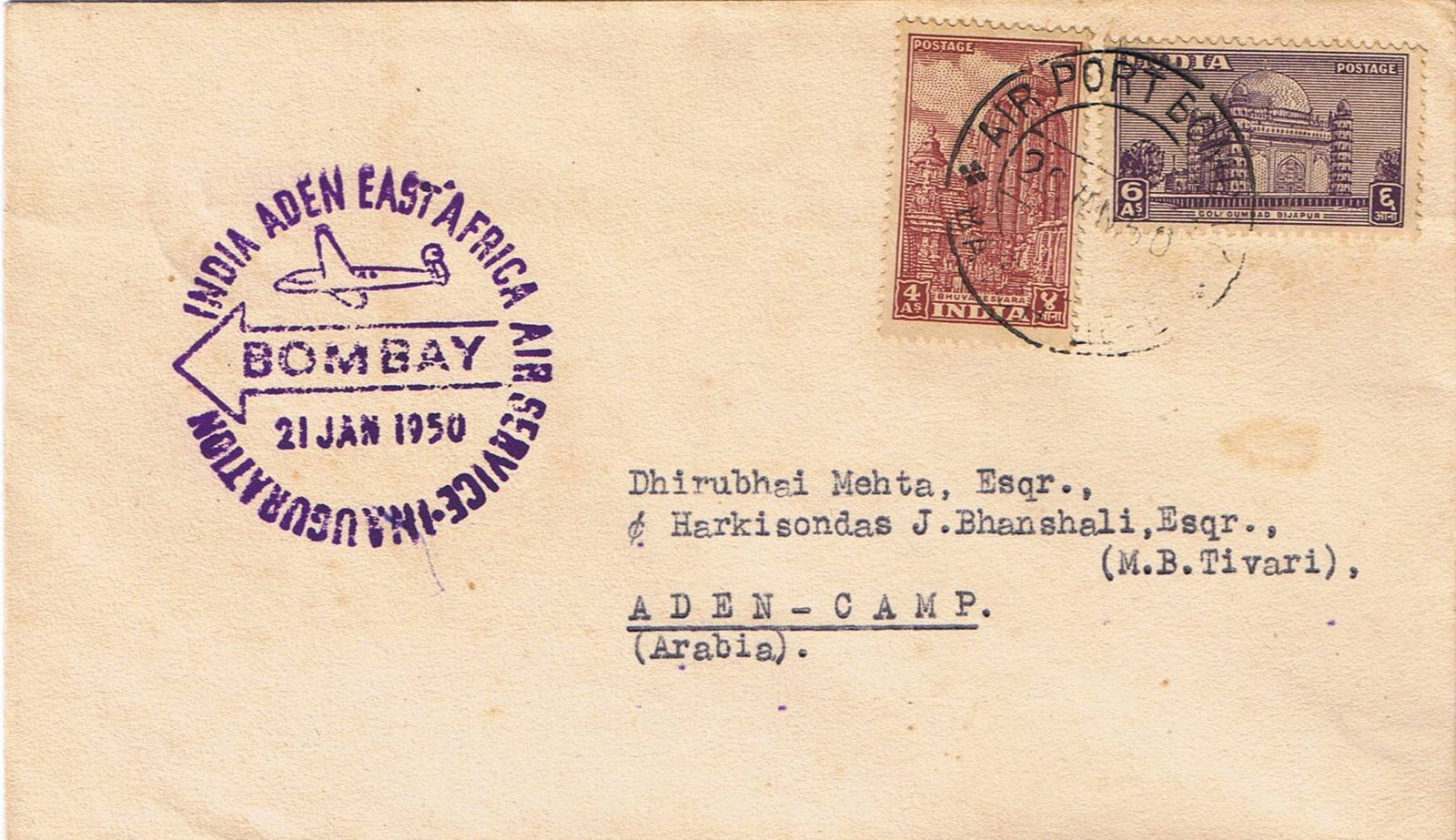
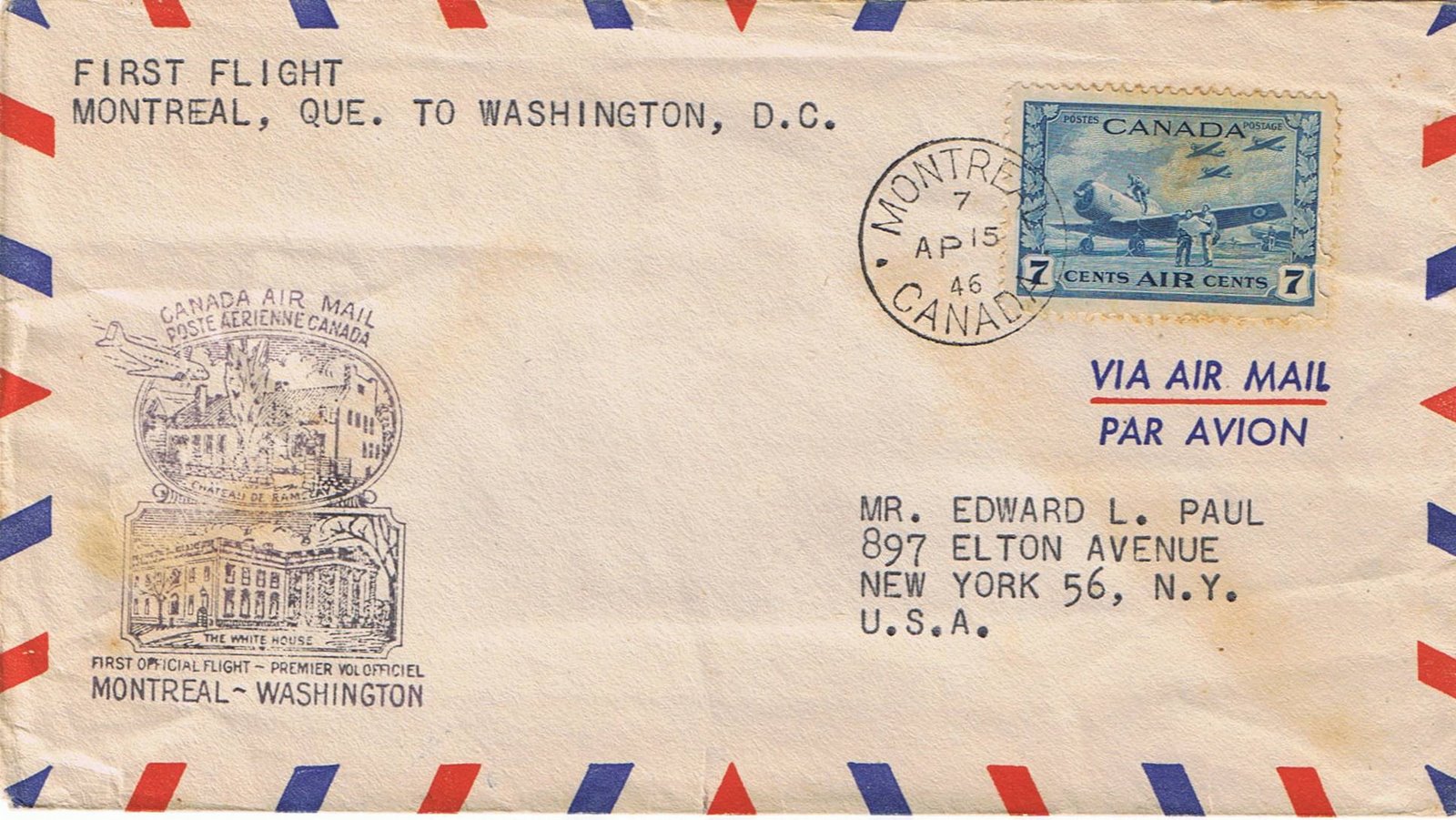
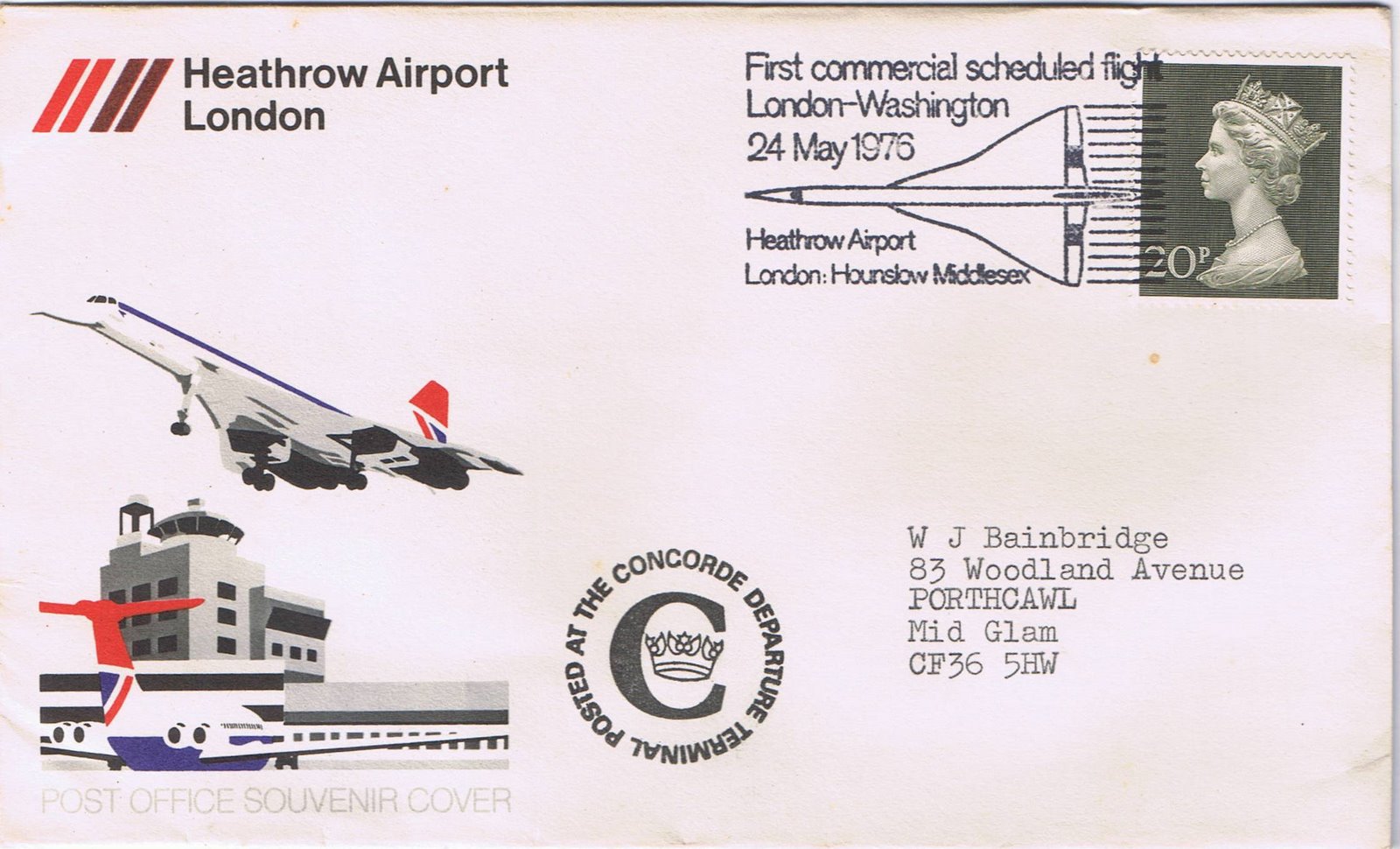
  • first flights and other "special" flights covers

  • rates and routes

  • mail recovered from aircraft accidents and other incidents (crash covers)

An aerogramme flown on a special balloon flight in France.

Besides the study of airmail transport by fixed-wing aircraft, the fields of balloon mail, helicopter mail, dirigible mail, zeppelin mail, missile mail, and rocket mail are active subspecialties. Astrophilately, the study of mail in space, is a related area.
I'll explain the various nuances in future posts, with pictures etc.

Please contact me if you are a fellow enthusiast or want to know more about aero-philately.